CategoriesNews

Lithium Battery option in Inverter/UPS/Solar PCU

What’s the Lithium battery option in Inverter/UPS/Solar PCU? We at Su-vastika have provided our inverter/UPS/Solar PCU to connect Lithium battery LifePO4-based technology. So far, all the Inverters/UPS solar PCU sold can only connect Tubular SMF and lead Acid batteries. There is a switch at the back of the product through which you can switch and install these three types of batteries. So far, all the inverters available in the market are made purely for installing Lead Acid batteries only, like Tubular batteries, SMF batteries or Lead Acid batteries designed 20 years back. Now people are designing Lithium based Inverters/UPS, which are purely for Lithium batteries only, and they supply lithium batteries only.

At Su-vastika, we realized that the market is shifting towards Lithium batteries. In the next five years, the market will shift the majority towards the Lithium battery only, so we thought of designing the inverter/UPS where all the existing batteries and adding a Lithium battery is also possible. So one can buy a Lithium Iron Phosphate LifePO4 battery and install it with our Inverter/UPS/Solar hybrid PCU without making any changes. We have changed the charging software along with the limits of Low battery and boost voltage according to the lithium battery. In our Bluetooth-based Inverter/UPS/Solar PCU, the user can select the switch on the mobile application and make the changes very easily. In the mobile application, there is a provision for seeing which battery you have selected so the user doesn’t change the settings by mistake. Otherwise, there may be a problem with the charging profile.

The settings for the Tubular and SMF batteries are the same where the battery cutoff is at 14.4 Volts, or called the boost voltage, and the Lead Acid boost voltage is maintained at 13.8 volts, or boost voltage is maintained at 13.8 Volts. In both cases, the Float voltage starts, which charges the battery to the low current and brings it to 13.6 Volts to make the gravity of the battery get the maximum power from the battery. So in lead Acid batteries, there are generally Four stages of charging: Bulk, Absorption, Float and trickle charging.

In the Lithium battery, only one stage works: the bulk charging stage and the Absorption stage is there for a very short period. Trickle charging and Float charging are harmful to the lithium battery, so The charging profile required by the Lithium battery is completely different from the Lead Acid based batteries.

In all three batteries, the low battery cutoff is maintained at 10.5 Volts which has become the industry standard. But in the case of Lithium batteries, there are different chemistries used to make the cell, and the charging method is very different from the Lead Acid or Tubular battery.

Lithium batteries have very tight controls for charging and discharging, and the battery comes with the battery management System, which is an extra precaution in case someone tries to charge it with a higher current or voltage or discharge with a higher current. So we have provided our Pure Sinewave UPS, Pure Sinewave UPS with ATC and Solar hybrid PCU for the Lithium battery LIFEPO4-based technology. In the lifePO4 lithium battery, the individual cell has a 3.2Volt cell, and we charge differently than the normal lead Acid battery. So the individual cell is charged a maximum of 3.65 volts, and the lower limit of battery cut is 2.8 Volts to maintain the battery life.https://www.power-sonic.com/blog/lithium-vs-lead-acid-batteries/

Let us compare these two batteries and see why the change will happen in the next five years, where the Lithium battery will take over the Inverter/UPS industry very smoothly.

The life of the Lithium battery compared to Lead Acid Batteries, specially Tubular batteries: If Lithium batteries are charged properly. Low and High batteries are maintained strictly in the Inverter/UPS usage or power backup case. This can last from 10 to 12 Years easily, four times the life of Lead Acid batteries like Tubular and five times the life of SMF batteries.

The Charging Time of Lithium battery Vs Lead Acid tubular battery: This is the biggest factor in favour of Lithium batteries as they can be charged in 2 to 3 hours, and Lead Acid battery, like Tubular battery, takes 15 hours to charge, which is so convenient for any areas where the power cuts take place intermittently. Power goes and comes back. Then the 50 Ah Lithium battery can give three times the backup of a Lead Acid tubular battery. Because 150Ah Tubular battery might give 2 hours back up after charging for 15 hours, and 17 hours are gone out of 24 hours, whereas the 50 Ah lithium battery can give you backup time eight times at least in 24 hours, which can result in 400Ah Capacity out of 50 Ah battery

The Capacity of the battery we get in Lithium Vs Tubular battery: this is the mind-boggling parameter which will be understood by people soon that the Tubular battery comes in C20 Capacity sticker or the Solar battery comes in C10 capacity sticker. The Lithium battery comes in a C1 capacity package. How do we understand this factor?https://suvastika.com/battery-size-selection-in-ups-inverter-for-cost-saving/

Clean technology vs Polluted technology: People using Tubular batteries in their homes and offices are breathing Lead fumes because the Tubular deep discharge batteries emit lead-based fumes, which are very harmful to the people consuming them. The lithium battery is a clean technology with no fumes or emissions of any gasses. So health hazard is the major challenge in Tubular batteries.

Depth of Discharge in Tubular Vs Lithium battery LifePO4

Power bill for Charging comparison of Lithium battery Vs Tubular battery.

CategoriesNews

Uninterrupted power with fast switching time: The key to keeping your devices running in a power outage.

Can we uninterruptedly run our Load on inverter/UPS without any reset of TV, Computer, Printer, Airconditioners etc.?

The answer is Yes. We only need an Automatic transfer switch in the Inverter/UPS with a fast switching time of less than ten milliseconds.

Short switching time is the key to a smooth transition from utility to battery power.

Switching time/transfer time in a UPS (uninterruptible power supply) is the time it takes to switch from the utility to the battery power supply. It is typically measured in milliseconds.

The switching time is crucial because it determines how long the connected equipment will continue to operate without interruption when there is a power outage. If the switching time is too long, the related equipment may shut down, or reboot, which can cause data loss, or the TV will get rebooted along with the Netflix picture, which might take 3 minutes to return to the original condition.

The switching time of an inverter/UPS is determined by the type of UPS and the manufacturer’s switching time specification. Inverter/UPS/Home UPS has two kinds of switching times.

  1. Mains to Inverter Mode: As the Power goes off, there is a switching time from Mains to Inverter mode, which is generally higher than the Inverter to Mains Mode. For the Power Electronics designer, handling this is a challenging task as the MOSFET or IGBT can burn if this is maintained at a very low level.
  2. Inverter to Mains Mode: This is the switching time when the Power returns, and then the Inverter/UPS need to switch back to Mains mode. This is critical as the design must be meticulous and change at zero crossing so that relay or static switch used for switching has a longer life.

Here are some of the factors that affect the switching time of a UPS:

  • Type of UPS/Inverter: Many Inverter/UPS are available in the market, and switching time varies from manufacturer to manufacturer and the product’s capacity.
  • Voltage Range: If the voltage range is wide, the switching time will be higher, and if the voltage range window is small, a faster switching time will occur.
  • Load on the UPS: The heavier the Load on the UPS, the longer the switching time will be. The UPS needs to transfer more Power from the battery to the connected equipment when the Load is heavier.
  • Operating temperature: The switching time can increase at higher temperatures depending on the sensing circuit used by the manufacturer

Suppose the switching time is more, and the Inverter/UPS gets reset. In that case, the inrush current will come into the picture while starting the Load. If the switching time is faster, then the Inrush current never comes into the picture, and It has more inrush capacity automatically. This is a critical feature to understand when choosing the Inverter/UPS for fast-switching technology.

At Su-vastika, when the Power comes back, our switching time remains 1 to 3 milliseconds as we change the Load at zero crossing, which is the main reason for our low switching time and the durability of our product range. 

The switching time of a UPS is typically specified in the product documentation. It is essential to choose a UPS with a switching time that is short enough to meet the needs of the connected equipment.

By understanding the factors that affect the switching time of a UPS, you can choose a UPS that is right for your needs.

CategoriesNews

What’s Solar Charge Controller

The Solar charge controller is the device that helps charge the battery through the solar panels. This device is important for charging the battery through Solar panels and is called a solar charger or solar charge controller.https://en.wikipedia.org/wiki/Solar_charger

Let us understand in detail: Solar panels are a DC device, and the battery is also a DC device so we can charge the battery through solar panels directly. What will happen if we charge the battery directly through solar panels? Solar panels have high voltages compared to battery voltages. So let us take the example of the solar panel of 150 Watt which has a VOC or Open Circuit voltage of around 22 to 23 Volts and a battery voltage is 12 Volts, so when we try to charge the battery then, we need to stop the Tubular/SMF Lead Acid battery boost voltage at 14.4 Volts, and then we need to charge the battery Float mode where we need to reduce the battery voltage to around 13.6 Volts and charge it at a prolonged current so that the battery’s gravity is made to get the full back up from the battery. In this condition, we can’t generate directly from the solar panels as the voltage is very high in solar panels, so they will charge the battery and take it to 17 to 18 volts which will be the overcharging stage for any battery since the solar panels have no control of cutting the battery charging at a fixed voltage so the solar panel will charge the battery straight to the higher voltage which will damage the battery after few charge-discharge cycles. Another factor is when the load is applied to the battery. The battery will start discharging, and there is no such control of the LVC Low Voltage cutoff, which is an important factor in saving the battery from deep discharge. Another factor is matching the solar panel with the battery to charge. We need 10% of the battery capacity to charge the battery. So in the case of a 150 Ah battery, we need to charge it with a maximum of 15 Amps, and if we try to charge with a higher current, then the lead Acid battery will charge faster. There will be a battery water loss, and the life of the battery will be compromised if try to charge the battery with a very high current, like 50 or 60 Amps, to a Tubular battery 150 Ah battery then the battery will be charged in less than 3 hours and can also blast as we are charging it with a very high current.

Solar Panel Configuration for 12V Solar Hybrid PCu with MPPT

Solar Panel Configuration for 12V Solar Hybrid PCU with MPPT

All these three issues are taken care of by the solar charge controller. So solar charge controllers reduce the charging Current as per its capacity. So if the charge controller is made for 15Amps current, then it will not let more current pass through it and will stop the Current to the battery in case someone tries to give more Current through the solar panels and will save the battery from being harmed. It has the mechanism not to charge a single battery of 12 v beyond 14.4 volts or whatever the manufacturer sets the fixed voltage. So in the case of 24 volts, the general setting is done for 28.8Volts and 48-volt system, the setting is done for 57.6 volts. So every charge controller has a voltage limit to pass through, after which it gives the warning, stops functioning, and saves the battery life and overcharging.

In the same way, the low battery cutoff or LVC of the battery is controlled through the solar charge controller to save the battery from deep discharge. Another important feature of the solar charge controller is to have the ATC Automatic temperature compensation to take care of the Lead Acid battery to control the boost voltage according to the temperature so that the Lead Acid battery can give the proper backup time in winter and in summers battery boost voltage is reduced to save the electricity bill and the life of the battery. Another function of the charge controller is to stop the current flow from the battery to the Solar panel. As both are DC devices, the current flow will happen on both sides, so at night, if the battery starts giving current back to the solar panel, it might damage the solar panels. So there is a diode which controls the flow of power from the solar panel to the battery and doesn’t let the current flow back the Current to the solar panel through the battery.

Now PWM stands for Pulse Width Modulation, and the charge controller is a simple charge controller circuitry which provides the power from the solar panels to the battery. Almost a 30 to 60% loss happens when it charges the battery. For example, let us take the 12-volt battery charging through the solar panel, which has a VOC of 22 volts. So to make it 150 Watt panel, it gives approximately 7Amps Current from the board. Now the PWM charge controller will reduce the voltage as per the battery voltage to charge it, so if the battery is fully discharged, the solar charge controller will reduce the voltage to 10.5 Volts from 22 Volts VOC. Some current will also be lost through the PWM charge controller, which will be approximately 1 to 1.5 Amps depending upon the quality of the charge controller, so we take 1 Amp loss, and the voltage reduction of 10.5 Volts then the total wattage which goes to charge the battery will be 10.5X6=63 Watt so the wattage of panel being wasted at this stage will be almost 60% and the same way we can calculate the wattage going to charge the battery on 12v,13V and 14V. so once the battery reaches to the 12V than 12X6=72Watt which is 50% of the panel wattage. So once the battery reaches 14V, it becomes 14X6=84Watt, the maximum peak wattage used for the battery charging, and the rest of the panel capacity is wasted.https://suvastika.com/how-to-match-the-solar-panel-voltages-and-battery-voltage-in-solar-hybrid-pcu/

The maximum waste of panel wattage happens when the charge controller charges the battery into the Float mode as the battery voltage reaches 14.4 Volts, the charging current reduces to 2 to 3 Amps for reducing the battery voltage, and it charges the battery very slowly to make the gravity of the battery. So let us calculate the battery voltage reduced to 13.8X2=27.6 watts. The float mode for the battery is a slow charging concept, and this is the lowest output we get from the PWM solar charge controller. So there are three stages of charging Bulk, Absorption and Float charging, which are important for the Lead Acid battery. If any manufacturer does not put these conditions in their solar charge controller along with the ATC feature, then the life of the battery will be reduced. There might be more battery water loss and heating inside the battery. Nowadays, the manufacturer designing the PCU tries to make it for 60 to 70 Amp solar charge controller without any stages and protection where the user can install more panels to charge batteries. They spread the rumours in the market that their Solar PCU does the sharing while charging the battery, and the battery charging will be shared with the load. So they tell the dealers to install more panels on the solar PCU, resulting in higher current charging of batteries. The battery life is reduced, the battery water topping has increased, and there are places where battery blasts are also happening. Ultimately the customer is complaining that the electricity bill has increased after installing Solar PCU as the solar and the Grid are charging the batteries.

The MPPT or Maximum Power Point Tracking Charge controller has complex circuitry, which increases the Current coming from the solar panels and increases the efficiency of the solar panel, which is lost in the PWM charge controller. Maximum power point tracking – Wikipedia

The MPPT tracks the voltage and Current from the solar panel to determine when the maximum power occurs to extract full control. The MPPT then adjusts the voltage to the battery to optimize the charging. This results in a maximum power transfer from the solar module to the battery. The MPPT charge controllers are 30% more efficient than the PWM-based ones.

For Lithium batteries, the solar charge controller needs different boost voltages to charge, and the low battery cutoff is also different. The lead Acid battery charging is very complex, has minimum three-stage charging, and needs ATC. But for Lithium, there is no such complexity is required, but the boost voltage and low battery cutoff settings are different,

CategoriesNews

What’s Battery Energy Storage System

ENERGY STORAGE SYSTEM (ESS)

Battery Energy storage systems store energy from difficult to more convenient or economically storable forms. Some technologies provide short-term energy storage, while others can endure much longer. So short time energy storage systems are becoming popular in the world. The energy is stored through the grid, Solar and Wind or any other renewable energy source, and in the rechargeable Lithium battery bank, ultra-capacitor, flow battery etc, for use when required. Energy storage has become important to reduce the power bill in case of Peak time usage, reduce the energy cost, or use it in case of blackouts://en.wikipedia.org/wiki/Energy_storage

Battery Energy Storage System

Lift Inverter/ERD with lithium Battery.

The Energy Storage in lead Acid batteries has not been easy because of Lead Acid battery inherent problems.

These energy Storage Systems are called battery Energy Storage Solutions because the energy is stored in the batteries. In India, there are still areas where power cuts are a common scenario, and Diesel Generators are being used for running all kinds of commercial, residential, Factories, hospitals, Schools, Colleges and Hotels etc., on these diesel generators, which is a big pollution concern for society.The Diesel Generators can be replaced with the Battery Energy Storage Systems as this is a clean and green energy. In Delhi, NCR Diesel generators are banned by the NGT. However, implementing this order has not been possible for the last three years, and everyone is looking for an alternative green solution. Battery Energy Storage Solutions can be a powerful alternative green solution, and many companies in India are developing these technologies indigenously. Su-vastika is one such company to bring in these Battery ESS and has been working on technological innovation in this field. The price of battery Energy Storage Sytems in India is very competitive compared to the developed world.https://suvastika.com/why-does-replacing-generators-with-lifepo4-based-lithium-ion-technology-make-sense/

30KVA Battery ESS with 20KW Lithium battery bank.

30KVA Battery ESS with 20KW Lithium battery bank.

Su-vastika has developed the Battery ESS with the Lithium battery bank and has started installing these systems in various pockets. The journey has been quite a learning experience, and we are continuously developing the technology which shall work in an Indian environment where a lot of dust, humidity and heating is all around. We initially used this technology in lift Inverters and realized that this could also be replicated in other bigger storage projects. We made Lift Inverters/ERD 4 years back and kept improving the technology in the storage industry. Now we are ready with our Battery Energy Storage Systems for as big as 500 KVA single load capacity. We have realized with our experience that Lead Acid batteries, like tubular or Gel batteries, are tough to maintain as they are cumbersome, and balancing the cells is impossible. The life cycle is another issue when used in bigger battery banks with multiple batteries. People have been working on flow batteries for the last two decades. Still, I have not seen much commercial use compare to Lithium battery which has become the acceptable commercial usage battery across the fields. The battery Energy Storage Systems Prices are also dropping over a while. Mr. kunwer Sachdev, the inverter man of India, is behind the brain of Battery Energy Storage Systems due to his vast experience in Storage and renewable industry.

We have developed battery ESS having a Lithium LifePO4-based cell and have designed the BMS for Indian conditions where the cell equalization remains below 10mv Equalization. Our ultimate goal is to increase the battery life so that the battery should last for more than ten years. These systems can be run on solar energy by installing solar panels and a solar charge controller.

Lithium Battery Bank with BMS Power Analyzer attached for testing

Lithium Battery Bank with BMS Power Analyzer attached for testing

CategoriesNews

What are the benefits of Bluetooth Inverter/UPS

Digital Warranty

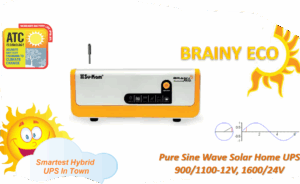
We have introduced a new feature in our latest UPS called Pure Sinewave UPS with ATC. We have developed this UPS after a lot of study of the challenges faced by the users while operating the Inverter/UPS available in the market.

The challenge for the Inverter/UPS owners is to see the status of Inverter/UPS in case anything goes wrong and UPS is shut down. You are getting frustrated as the LEd on the Inverter is blinking, or the LCD is giving some stupid message that you can’t understand, and you have no choice other than to call the electrician.

It takes time, and you don’t know what to do. So we have come out with a real solution: open the Su-vastika mobile application and see the message, and it will guide you on what to do in what condition. There are alerts for Overload, and the message will tell you what to do. If the power outage happens, it will keep giving you a message of power failure with the audio alert so that you know that Power has failed.

Also, when the mains power is present, it will show you the voltage and frequency coming into your premises. In case of voltage fluctuations, you can see the real voltage dipping or High voltage coming at your place. Not only these times when the main Power is coming, but also the MCB of the Bluetooth Inverter/UPS goes off the reason is the Load connected with the Inverter/UPS exceeds its limit. This isn’t very pleasant for the user as the user doesn’t understand the functioning of the Bluetooth Inverter/UPS. But in Bluetooth mobile application, we clearly show the user that MCB is down, and please lift the MCB from the back.

Another important feature is battery percentage which can be seen by the user how much battery is being charged, which gives the fair idea that in case of power failure, how much is the backup left?

Another important feature is when the main fails, then the Load is shown on the mobile screen, which is how a user knows the wattage being used when the Power fails, and according to his requirement, he can increase or decrease the Load. Also, the ATC feature can be seen on the screen in case of temperature change. One can see the boost voltage changing, which increases the battery life.

Mains fail

Mains fail

All our Pure Sinewave UPS has the settings to use the Lithium battery, which will help the user to choose between a Lithium battery and Lead acid tubular battery or SMF battery. So the user is not forced to install only a heavy 65 KG Tubular battery. The user can set the setting himself through the mobile application.

Another important setting in the Bluetooth UPS is choosing the battery size or, when selecting the Lithium battery, how fast you can charge it; as it’s a known fact that we can charge a Lithium battery in 2 hours, so this setting works for charging the lithium battery slowly or fast by increasing the charging current.

Battery Charging Amp. Setting as per battery rating.

Battery Charging Amp. Setting as per battery rating.

Battery reserve is another big feature of the setting. We can set the reserve as battery reserve helps increase the battery life. The same feature allows the user, in case of an emergency, you can get extra backup when the ups are completely exhausted by changing the settings on the mobile app. This feature works like a reserve in a scooter or motorcycle. It stops the scooter when the petrol is very low, and the user changes the scooter’s settings to reserve mode and runs an extra mile. The same feature we have adapted in our a-pure Sinewave UPS with the ATC model in the reserve setting mode.

Another important feature is Overload at the time power fails. Then also you get the message about how much Overload is in terms of percentage. Say 110% load is running. Users can reduce the Load, and the Inverter/UPS functions fine. But in case the user does not reduce the Load even after eight warnings, then the UPS will get into the switch-off mode, and still, the user does not have to go to Inverter or UPS to reset the front switch as we have given that switch also on the mobile application and user can reset from the mobile application, which is very important for the convenience of the user. The same case is with the Short circuit also.

Another important feature is the Load to be shut down by the user from the remote control through the mobile application, which looks like a Magic moment for the user.

Another challenge is the settings of the Inverter/UPS and the switches are given at the back panel of the Inverter/UPS and are very tough to understand by the user.

So here it comes on Bluetooth inverter/UPS. We have given all the settings on the mobile application. One can easily see on the mobile application and set the settings.

In our Pure Sinewave UPS, we have a lot of settings given as it’s a 5th-generation UPS with  Artificial Intelligence, which will impress the user once he sees the product demo.

The most important feature of the mobile screen is the 50 and 60 Hz Frequency. In some countries, the voltage is 220Volt, but the frequency is 60Hz. So we have designed this product for 50 and 60 Hz automatic selection. This automatically detects the Input frequency and gives the same frequency when the Power fails. No other manufacturer has considered making a common product that can work in countries with 60 Hz, like Saudi Arabia.

We have the USB port at the back, which has been kept to check the parameters of the UPS and can be used to convert the normal UPS to Bluetooth and Wi-based UPS without making any changes.

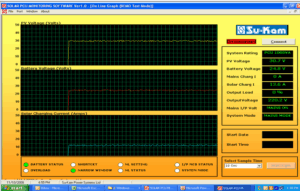
This USB port will be used to check the parameters of UPS at any given time through the computer having our proprietary based software. The price of a Bluetooth Inverter is a little higher than that of an Inverter/UPS. The Bluetooth Inverter/UPS has the option of a Convertor to install, so our price of Bluetooth inverter/UPS is cheaper than any Bluetooth inverter/UPS available.

In future, if we need to update our UPS software, we can update the software through this USB port.

This USB port will also be used for checking the digital warranty also. The dealer can show the warranty to the user before installation of the product and can check the warranty at any given time through the laptop or Bluetooth dongle.

All the settings of the UPS can also be done through this USB port, like Wide UPS and UPS mode.

CategoriesNews

Why Choose Low Frequency Heavy Duty Inverter/UPS

The low-Frequency Heavy Duty inverter/UPS/ Solar PCU are reliable products as the isolation transformer is built-in to handle external problems like high and Low voltages, Spikes and surges.

Low-frequency heavy-duty inverters have advantages over high-frequency inverters in peak power capacity and reliability. Low-frequency inverters are designed to handle higher power peaks longer than high-frequency inverters. So if one has to run high peak motors or machinery like CNC machines or central air conditioning plants or running a complete building or factory, then the low frequency based inverter/UPS is the only solution.https://www.sciencetimes.com/articles/42696/20230306/understanding-the-difference-between-low-frequency-and-high-frequency-inverters.htm#:~:text=In%20conclusion%2C%20low%20frequency%20and%20high%20frequency%20inverters,compact%2C%20making%20them%20suitable%20for%20powering%20electronic%20devices.

High capacity inverter 100KVA with lithium battery bank

Heavy-duty UPS with Lithium battery bank

1. PEAK POWER CAPACITY

According to the spectrum distinction table prepared by the Institute of Electrical and Electronics Engineers (IEEE), the low frequency is 30~300kHz, the middle frequency is 300~3000kHz, and the high frequency is 3~30MHz. The frequency plan in 30~300MHz is VHF, and in 300~1000MHz is UHF. Compared to the low-frequency signal, the high-frequency signal changes quickly and has sudden changes; the low-frequency signal changes slowly, and the waveform is smooth. This is why the THD in Low frequency is not very good for the smooth waveform. The THD of low-frequency inverter/UPS is very low compared to the high-frequency inverter/UPS.

Low-frequency inverters can operate at peak power levels for several seconds. This power level is up to 300% of its rated power level, while the high-frequency Inverter can use at 200% power level for a fraction of the time, which can be a game changer for the heavy-duty Inverter or high-capacity 3 Phase inverter/UPS

2. RELIABILITY

The second main difference is reliability: low-frequency Heavy duty inverters/UPS operate with powerful, more reliable and robust transformers than the IGBT/MOSFETs of high-frequency inverters. The latter use electronic switches more prone to damage, especially at high power or voltage variations.

3. Isolation transformer

A major challenge is the isolation between Neutral and line which becomes a major factor of failure in High frequency based Heavy Duty Inverters/UPS/Solar hybrid PCU. The isolation is very poor in high-frequency-based inverters/UPS. In Low frequency based Inverter/UPS/Solar hybrid PCU there is an isolation trand=sformer which is very heavy in weight and keeps the isolation so that the failure is averted during the charging.

4. the Overload and short circuit

are different in low-frequency and high-frequency heavy Duty inverter/UPS/Solar Hybrid PCU as the Low-frequency Overload retries are given, Short circuit also retries are given, and Short course is kept at 300%, which is very tough to maintain in the low-frequency Inverter/UPS

5. life span

life of the low-frequency heavy Duty 3 phase  Inverter/UPS/Solar hybrid PCU is very high compared to the low-frequency inverter/UPS as the switching happens at a very high frequency in the capacitors and Mosfets etc., so the life of the components is shortened. In contrast, the low frequency has a transformer, and the switching happens at a lower frequency, so the life is unlimited. I have experience with Su-kam, where we made inverters 25 years back. They have no problem and working without any faults till today because of the built-in transformers.

6. Bluetooth or Wi-Fi Heavy-duty UPS or High capacity inverter to monitor and control the Heavy Duty UPS or high capacity Inverter

Why SHOULD YOU CHOOSE A LOW-FREQUENCY INVERTER?

Low-frequency Heavy duty inverters/UPS are very successful in countries or areas where the power is unstable, with fluctuating power and long power cuts. The high-Frequency High capacity inverters/UPS are successful in countries or regions with stable management and hardly any long power cuts: low-frequency heavy capacity 3 phase inverters/UPS are good for running higher loads like Air conditioners, motors, CNC machines, etc.https://suvastika.com/high-frequency-based-inverter-ups-or-transformer-based-inverter-ups-which-one-is-better/

The increased peak performance capability and reliability of low-frequency inverters means they cost more than high-frequency inverters. If your energy consumption is small and only small appliances need to be powered or have limited space to place the Inverter, a high-frequency inverter would be better for you.

CategoriesNews

DIESEL GENERATOR, FRONTPAGE ARTICLE, TECHNOLOGY

What factors make Diesel generators unsuitable for people and businesses?

Diesel Generator Pollution

Generators have previously been used as a backup energy source in workplaces and homes. However, their use has recently declined significantly. UPS/inverters have already met the demand for smaller generators. Larger generators should be replaced with heavy-duty UPS/inverters now.

Here are all of the reasons for this shift.

Delays and interruptions are caused by manual start.

Generators, in most cases, require a manual start, which causes work delays and interruptions. It is extremely inconvenient to lose power in the middle of an important presentation or while working hard to complete a shipment.

High operating costs

Generators are powered by fossil fuels such as oil (kerosene, gasoline, and diesel) and natural gas. The rising cost of fossil fuels raises its operating costs, making it a less economically viable option.

Pollution of the environment

The smoke emitted by generators also endangers the health and well-being of those who work near them. Poisonous gasses, such as carbon monoxide, are extremely dangerous to one’s health.

A loud operation

Generators also produce noise pollution. When using generators in apartments or workplaces, the annoying harmful noises can be a nuisance. Their constant ear-shattering noise can tensile the environment and frustrate workers who want to focus on their work.

Make the environment hot.

Generators generate a lot of heat. The cooling system and the heat exhaust system keep the unit cool. However, the surroundings become hotter in the process. The added heat becomes unbearable in a country like India, where summers are already scorching.

Fuel storage space is required.

Generators run on fossil fuels, so you must always have fuel on hand to keep the fuel tank at optimal. As a result, they require additional storage space for fossil fuels. Because fossil fuels are flammable, they are always a fire hazard.

Maintenance is expensive.

Generators are powered by smaller components that require routine maintenance. Running it on gas corrodes its parts, reducing performance. As a result, you must replace old worn-out parts on a regular basis. Furthermore, recurring malfunctioning and regular cleaning to keep the unit in peak operating condition make upkeep prohibitively expensive. Furthermore, the moving parts in a generator limit its lifespan to a maximum of ten years.

The ideal solution for power backup.

LiFePO4 technology is a tried and proven battery technology in the industry. Long power outages have prompted people to seek alternative solutions. With continuous technological advancement over the years, UPS based on LifePO4-based technology, has emerged as a far superior alternative to a generator. 

There will be no interruption because power will be supplied to the AC load automatically.

The operations are powered by alternating current (AC) under normal conditions. Simultaneously, it charges the batteries, which store the energy as DC. A UPS draws DC stored in batteries and converts it to AC power in the event of a power outage. When this occurs, a static switch prevents the battery from charging, and the inverter begins supplying the stored battery power to the AC load. This rapid power supply to the main reduces interruptions and normal workflow.

The advanced static switches in heavy UPS systems are so efficient and responsive that they reduce switching time to a bare minimum. As a result, computers and other electrical appliances do not experience unexpected shutdowns or data loss.

Conclusion

With UPS having already dominated the small generator market, the next big thing on the horizon is a high-tech heavy-duty UPS/inverter. With rising fuel costs, now is the time to abandon the larger generators used in offices, factories, apartment complexes, and so on and replace them with heavy-duty UPS.

CategoriesNews

DIESEL GENERATOR, ENERGY STORAGE SYSTEM, FRONTPAGE ARTICLE

Why does replacing generators with LiFePO4-based Lithium-ion Technology make sense?

Energy Storage System

Power outages are common, particularly in developing countries such as India. Frequent power outages without a backup system can severely disrupt normal household and workplace operations. Even the most successful companies complain about the negative impact of frequent power outages on their operations.

Imagine the chaos in workplaces, educational institutions, hospitals, or factories when the power goes out unexpectedly. The light goes out, machines and equipment stop working, and people in various locations screech to a halt. Students in the middle of an important exam, patients on the ventilator fighting for their lives, or a businessman finalizing terms with a sought-after investor all are disrupted by power outages.

In India, small and medium-sized businesses have only recently begun to recover from the debilitating effects of the pandemic and the ever-changing geopolitical situation. However, sweltering heat and prolonged power outages have the potential to paralyze the industry once more.

The general public and businesses rely on two temporary solutions to avoid losses caused by painfully frequent power outages: generators and UPS/inverters. However, in recent years, UPS inverters have surpassed generators in popularity. Let us consider the factors that make generators less desirable before considering the advantages that make UPS inverters more popular among the general public.

What exactly is a UPS/inverter?

A UPS, or Uninterrupted Power Supply, is a system that provides continuous power to homes and businesses in the event of a power outage.

A single-phase or three-phase UPS can be used. It could range from a small black box protecting your computer from power surges and dips to a massive 500KVA system powering buildings and workplaces.

When there is a power outage from the main, the UPS/inverter automatically supplies power to the electrical circuit.

What makes it more appropriate for use as a backup power source?

Long power outages have prompted people to seek alternative solutions. With continuous technological advancement over the years, UPS has emerged as a far superior alternative to a generator. 

There will be no interruption because power will be supplied to the AC load automatically.

The operations are powered by alternating current (AC) under normal conditions. Simultaneously, it charges the batteries, which store the energy as DC. A UPS draws DC stored in batteries and converts it to AC power in the event of a power outage. When this occurs, a static switch prevents the battery from charging, and the inverter begins supplying the stored battery power to the AC load. This rapid power supply to the main reduces interruptions and normal workflow.

The advanced static switches in heavy UPS systems are so efficient and responsive that they reduce switching time to a bare minimum. As a result, computers and other electrical appliances do not experience unexpected shutdowns or data loss.

Make use of lithium-ion batteries.

Because of the impressive history of stability and cycle life of lithium-ion batteries, the new inverter/USP technology is revolutionizing the power backup industry. They outperform lead-acid batteries in terms of efficiency.

Lithium-ion batteries charge in 2 to 3 hours, while lead-acid batteries take 8 to 10 hours. In the event of frequent power outages, the Lithium-ion battery is always ready to quickly recharge and provide ample backup energy to withstand the power outage when compared to Lead Acid.

In comparison to lead-acid batteries, which have an average cycle life of 300-400 cycles, lithium-ion batteries have an average cycle life of 2500 to 5000 cycles and a life span of 8 to 10 years, a true game changer.

Overall, lithium-ion batteries are far more efficient in terms of energy storage and discharge. Unlike fossil fuels, lithium-ion batteries require no special infrastructure or storage.

Solar panels provide power.

Every year, India receives between 2600 and 3200 hours of solar energy. Sunlight is abundant and free if you can harness its power and use it to your advantage. The new Heavy-Duty UPS technology is powered by solar energy and uses MPPT charge controller circuitry.

UPS powered by solar energy eliminates the need for electricity or fossil fuels to generate backup power. In the event of a power outage during the day, solar energy combined with battery power extends the backup time. When compared to existing generators, solar energy reduces the running cost of UPS by discounting the charging cost, making it almost free of charge.

Avoid power supply dips and surges.

Heavy-duty UPS are intended to keep appliances in good working order by protecting them from anomalies such as surges and dips in power supply from the main. Using technologies such as the “Soft Start System” and the “Automatic Voltage Regulation” prevents electrical appliances from experiencing a sudden surge of current. The gradual supply of voltage to sensitive devices prevents jerk voltage or spikes. Furthermore, the switching time is so short that the appliances will continue to operate even if the power goes out.

There is no pollution (noise, air)

In India, pollution levels are rising. Population growth, combined with a heavy reliance on fossil fuels, is fueling the fire. Heavy-duty UPS is a more environmentally friendly alternative to polluting generators. A dedicated room for storing fuel is not required for heavy-duty UPS (diesel, petrol, kerosene). As a result, they pose no fire risk even when used in commercial settings. They also generate no noise or pollution.

Longer lifespan

A UPS, unlike a generator, has a very long life. They can run for up to 50 years without any major maintenance. Every eight to ten years, the lithium-ion battery bank must be replaced. Furthermore, unlike regular maintenance and malfunctioning of spare parts in a generator, heavy-duty UPS requires service engineers once a year. As a result, the overall cost of using a UPS is quite low.

Low operating costs

Solar-powered batteries power heavy-duty UPS systems. When compared to the operating costs of generators, the cost of a heavy-duty UPS is roughly one-fourth.

Design that is portable and compact

One of the most significant advantages of UPS/inverters is that they are more compact and smaller than generators. Even the most powerful inverters are not painful to the eyes.

Conclusion

With UPS already dominating the small generator market, the next big thing on the horizon is a high-tech heavy-duty UPS/inverter. With rising fuel costs, now is the time to abandon the larger generators used in offices, factories, apartment complexes, and so on and replace them with heavy-duty UPS.

CategoriesNews

Benefits of Bluetooth Heavy Duty UPS (IGBT)

Heavy Duty Bluetooth application

The challenge for Heavy Duty UPS(IGBT) owners is to see the status of UPS as it’s a Heavy Duty UPS and UPS is installed at a distance and seeing the parameters is not that easy, and going near the Heavy Duty UPS is tough. The major challenge is to see the Load running when the Power fails. in case anything goes wrong and UPS is shut down. So we designed Bluetooth Heave Duty UPS for the convenience of owners installing Heavy Duty UPS for homes and offices or commercial establishments.https://www.irjet.net/archives/V8/i3/IRJET-V8I3303.pdf

Download the mobile application from the Android Play Store by typing Su-vastika Heavy Duty UPS, and on the Ios application, type the exact words and download the application and install it on your phone. It will guide you on what to do in what condition. There are alerts for Overload, and the message will tell you what to do. If the power outage happens, it will keep giving you a message of power failure with the audio alert so that you know that Power has failed.

screen picture of i phone app store downloading th heavy duty UPS mobile application.

               Heavy duty UPS IOT based

Su-vastika is revolutionizing the High Capacity Inverter/Heavy duty UPS by bringing IOT-based Bluetooth and Wi-Fi-based battery Inverter/UPS.

MAINS MODE in Heavy duty UPS

                                   Mains mode

Also, when the mains power is present, it will show you the voltage and frequency coming into your premises. In case of voltage fluctuations, you can see the voltage dipping or High voltage coming at your place. Not only are these times when the leading Power is coming but also the MCB of the Bluetooth Inverter/UPS goes off because the Load connected with the Heavy Duty UPS or high Capacity Inverter exceeded its limit. So the user is aware of Voltage conditions at his home office or commercial establishment. The High capacity Inverter or Heavy Duty UPS Bluetooth based UPS is installed to run heavy loads like Air conditioners, motor loads or machines taking high inrush loads or is installed in the office where a lot of computers and printers are installed along with the standard lights and fans and air conditioners etc. So knowing the load percentage is very important for the user. So when the Power fails, the load percentage is shown, which helps the user to balance the load accordingly.

In the Heavy duty UPS Bluetooth, we have made graphics to show the flow of Power going through the mains power or the battery, and graphics illustrate the battery is being charged and how much Power it’s drawing from the Mains power to charge the battery.

Another important feature is battery percentage which can be seen by the user how much battery is being charged, which gives the fair idea that in case of power failure, how much is the backup left?

Another important feature is when the main fails, then the Load is shown on the mobile screen, which is how a user knows the wattage being used when the Power fails, and according to his requirement, he can increase or decrease the Load.

Mains Fail Pop-up

UPS MODE with alert pop-up of Mains Fail

 Mains fail All our Pure Sinewave Heavy duty UPS Bluetooth has the settings to use the Lithium battery, which will help the user to choose between a Lithium battery and a Lead acid tubular battery or SMF battery. So the user is not forced to install only a heavy 65 KG Tubular battery in case of 150Ah Capacity or SMF battery with a big rack, and one can see the big battery bank as the space taken for battery bank is huge in case of heavy Duty UPS Bluetooth or high Capacity Inverter. In the case of a Lithium battery, the area is reduced, and the weight is reduced to almost one-sixth of the Tubular battery or SMF battery weight, and one will not come to know by looking at the Lithium LifePO4 battery bank that any battery is installed in the home office or commercial establishment. The user can set the setting himself through the mobile application.

Then also you get the message about how much Overload is in terms of percentage. Say 105% load is running. Users can reduce the Load, and the High Capacity Inverter/heavy Duty UPS Bluetooth functions fine. But in case the user does not reduce the Load even after four warnings, which takes place then the heavy Duty UPS with Bluetooth will get into the switch-off mode, and still, the user does not have to go to Inverter or UPS to reset the front switch as we have given that switch also on the mobile application and user can reset from the mobile application, which is very important for the convenience of the user. The same case is with the Short circuit also.https://suvastika.com/load-percentage/

Overload and Short circuit condition

                                                                                            Overload and Short-circuit condition with Alert Notification

Another essential feature is the Load to be shut down by the user from the remote control through the mobile application, which looks like a Magic moment for the user. As the Load is very high and the battery bank is quite significant in this case, the wastage of battery power can be saved in certain special conditions.

We can see the digital warranty on the Mobile application, which is two years for the Heavy duty UPS Bluetooth for the complete range from 6.5 KVA to 15 KVA (1P-1P).Another challenge is the settings of the Inverter/UPS and the switches are given at the back panel of the Inverter/UPS and are very tough to understand by the user.

So here it comes on Bluetooth Heavy Duty UPS. We have given all the settings on the mobile application. One can easily see on the mobile application and set the settings.

The Battery type selected will be shown on the screen so that the user doesn’t choose the wrong battery while setting the battery type selection in Heavy Duty UPS Bluetooth. Heavy-duty UPS Bluetooth is included in the price of Heavy Duty UPS. There is no change in the price of Heavy Duty UPS with Bluetooth or the cost of heavy-duty UPS without Bluetooth.

In our Pure Sinewave heavy-duty Bluetooth UPS, we have a lot of settings given as it’s a 5th-generation UPS with  Artificial Intelligence, which will impress the user once he sees the product demo.

The most important feature of the mobile screen is the 50 and 60 Hz Frequency. In some countries, the voltage is 220Volt, but the frequency is 60Hz. So we have designed this product for 50 and 60 Hz automatic selection. This automatically detects the Input frequency and gives the same frequency when the Power fails. No other manufacturer has considered making a standard product that can work in countries with 60 Hz, like Saudi Arabia.

IOT-based Heavy Duty UPS or High Capacity inverter will revolutionize the power backup industry.

We have the USB port at the back, which has been kept to check the parameters of the UPS and can be used to convert the typical UPS to Bluetooth and Wi-based UPS without making any changes.

CategoriesNews

Review Of Lift Inverter/Lift UPS/ERD

The parameters on which we can review the Lift Inverter are described here. Generally, people try to use Online UPS for lifts which is not the right technology made for lifts as Online UPS has its other challenges.https://www.abnewswire.com/pressreleases/can-online-ups-be-the-right-solution-for-lift-or-escalator-backup_622835.html

1. Pure Sinewave waveform

2. Bi-directional Technology with Isolation transformer

3. Charger size depending on the battery size

4. Lithium battery compatibility

5. Switch over time or transfer time

6. technology patent

https://elevatorworld.com/news/daily-news/elevator-lift-emergency-rescue-device-earns-patent/

7. IOT Wi-Fi or Bluetooth-based technology

8. Digital warranty